A monthly price tells you only part of what an answering service will cost. The total also depends on which calls reach it, how long those calls last and which services are included. For a useful comparison, give each provider the same call assumptions and ask for the resulting bill.
Start with the calls you want help answering. If your staff will continue taking most calls and the service will handle overflow, the relevant volume is the overflow you expect to send. If it will answer first, use the wider call volume.
Put calls and minutes on the same footing
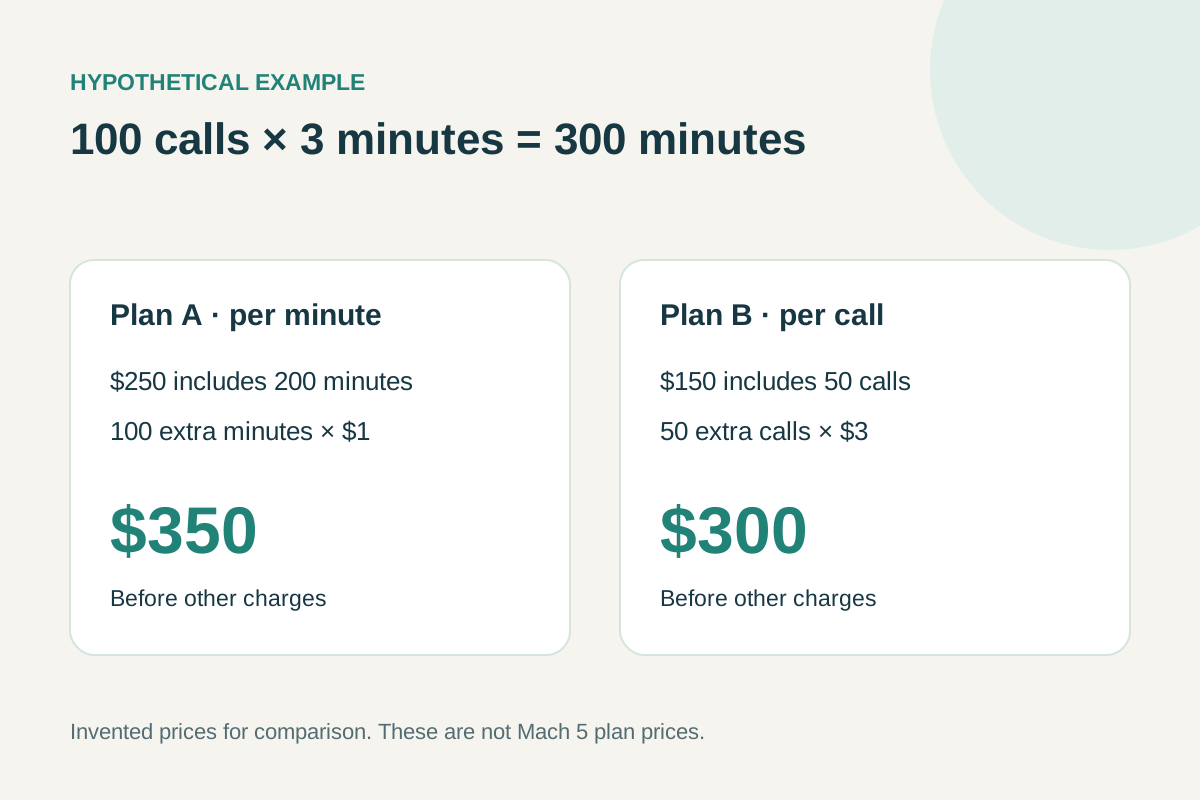
One hundred calls averaging three minutes equal 300 minutes. That does not tell you which plan is cheaper, but it gives you a common starting point.
Here is a hypothetical example with invented prices, not a quote from Mach 5 or another provider:
- Plan A costs $250 per month, includes 200 minutes and charges $1 for each additional minute. At 300 minutes, the bill is $350 before any other charges.
- Plan B costs $150 per month, includes 50 calls and charges $3 for each additional call. At 100 calls, that bill is $300 before any other charges.
If the same 100 calls averaged two minutes, Plan A would be $250 and Plan B would still be $300. The cheaper option changes with the usage assumption, even before you compare what each service does.
Find out what counts toward usage
Ask how the provider counts short calls, rounding, transferred calls and calls that reach voicemail. Confirm any separate phone, text, email or additional-service charges. If a service excludes certain calls from billing, get that definition with the proposal.
For Mach 5, the current pricing page explains the monthly plans and separate usage charges. The subscription amount is not an all-in estimate for every agency. Your call and message volume affects the total.
Compare the work included in that bill
Two services can answer the same number of calls and leave your staff with different next steps. One may take a message. Another may collect the details your agency chooses, help book a conversation or support a live transfer.
Ask each provider to price the services you actually want. If appointment booking or a particular handoff requires a different plan, use that plan in the comparison. The receptionist, answering-service and CSR comparison can help with the broader choice.
Keep staff time visible too. Your team still handles coverage advice, quotes and the service work that needs agency judgment. A lower phone bill does not, by itself, tell you how much of that work remains.
Use an ordinary month and a busy month
Price the same proposal twice: once with your ordinary call volume and once with a busier month from your own records. Include the follow-up messages or outbound work you expect to use. This shows how the expense changes without relying on a generic industry average.
Then compare the billing commitment, what is included and the caller experience. You can make the decision with a clear estimate rather than assuming the advertised monthly price is the final bill.